 WuffConnect
Guide
Finding a dog school: how to recognise good training
Puppy class, everyday training or a one-to-one session? With these questions, what to watch for in a trial lesson and a few legal basics, you will find a dog school that suits you and your dog.
Start with your goal: what should the dog school do?
Before comparing schools, think about what you need. A puppy mainly needs good experiences with people, dogs and everyday noises. With a young or adult dog, loose-lead walking, recall and calm encounters are often the focus. If you enjoy activity, you might look for dog sports such as mantrailing or agility.
For fear, insecurity or reacting on the lead, a group is often too much. A one-to-one session, where the trainer gets to know your dog calmly, is usually the better choice.
If your dog’s behaviour changes suddenly – it becomes irritable, snaps or no longer wants to walk – have a vet check first whether pain or illness is behind it. Training does not replace an examination.
How to recognise good trainers
In Germany, anyone who commercially trains dogs for others or instructs owners in training needs a permit from the competent authority under section 11 of the Animal Welfare Act. Feel free to ask – reputable dog schools are happy to tell you, and about their qualifications too.
Look for fair methods: good trainers work with rewards, clear body language and small steps. Painful tools have no place in training – prong collars and other means that are painful for dogs are banned in training and education under the German Dog Welfare Ordinance.
It is also a good sign when the trainer explains why an exercise is built the way it is and questions are explicitly welcome.
The trial lesson: what to watch for
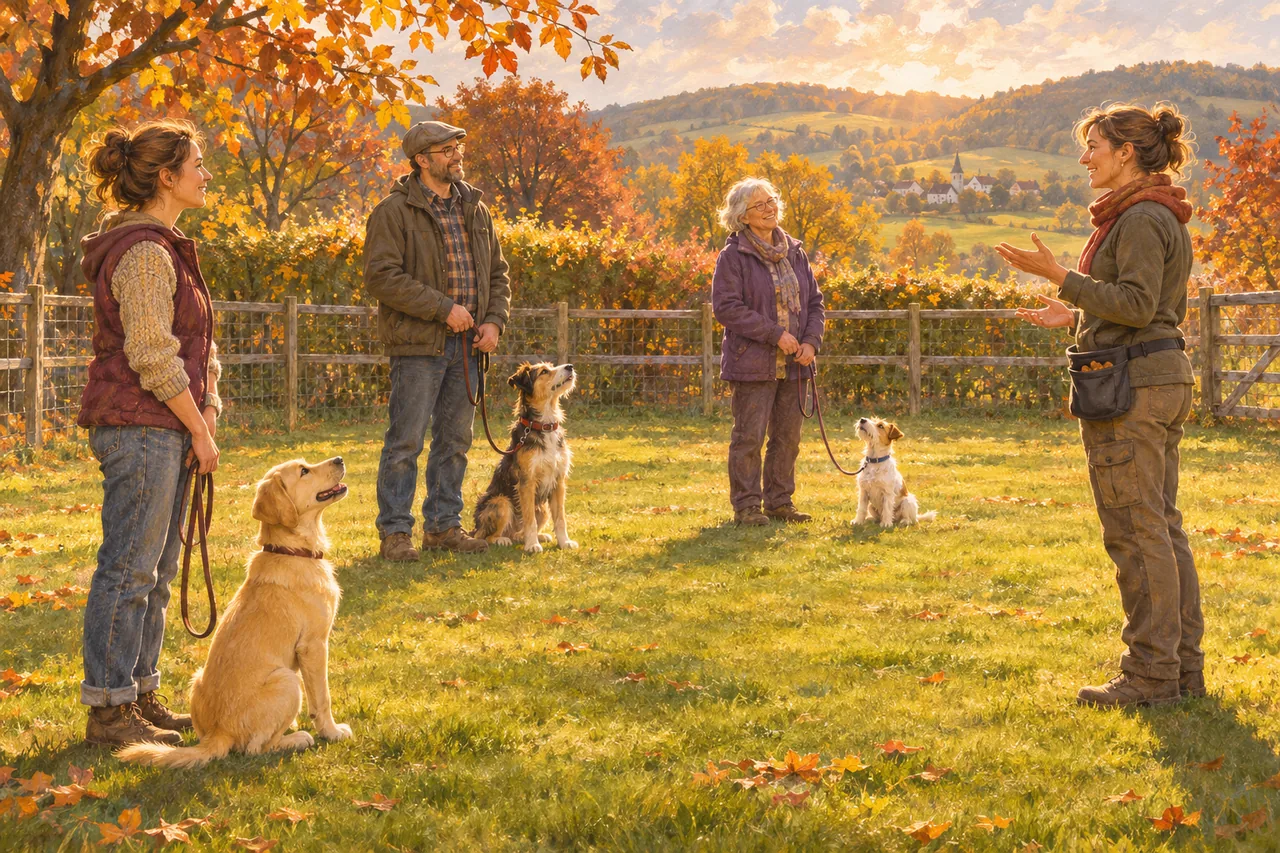
Many dog schools offer an introduction, a trial lesson or the chance to watch a group. Use it. Do the dogs seem relaxed, are they allowed to sniff and take breaks? Is there enough distance between the dogs?
A manageable group size means every team gets attention. If a dog becomes unsure, the trainer should notice and adapt the exercise instead of simply carrying on.
And very important: do you feel comfortable? You are the one who will practise with your dog later. A friendly, respectful tone with people matters as much as with dogs.
Group, one-to-one or course – and what it costs
Group lessons are ideal for practising with distractions and meeting other dog owners. One-to-one sessions suit special topics or if you want to stay flexible. Some dog schools also come to your home or train right where things go wrong in everyday life – on the street or in the park.
Prices and course models vary a lot. Ask in advance what a lesson or course costs, how long it runs, what happens if you have to cancel and whether there is a trial lesson. Ideally, get the terms in writing.
Bringing training into everyday life – with walking buddies and the partner list
What works at the dog school needs time to grow outside. Practise briefly and often on your normal walks. With a calm walking buddy you can train encounters, recall and lead walking along the way – at your own pace.
On WuffConnect you find dog owners near you for shared walks and can plan social walks. In the partner list dog schools and other dog-related businesses introduce themselves with address and contact – for example the dog school Hundsartig in Siegen. The list is just getting started, so check back regularly.
Frequently asked questions
When should my puppy start at a dog school?
Many puppy groups accept dogs once they have moved in with you and have the vaccinations your vet recommends. Ask the dog school and your vet what suits your puppy.
Does a dog school need a permit?
Yes. In Germany, anyone who commercially trains dogs for others or instructs owners in training needs a permit from the competent authority under section 11 of the Animal Welfare Act. You can ask about it.
Group or one-to-one – which is better?
It depends on your goal. Groups are good for practising with distractions; one-to-one sessions suit fear, insecurity or lead reactivity, or when you want to work on one specific topic.
How do I find dog schools near me?
Ask your vet and other dog owners about their experiences, look at websites and reviews and book a trial lesson. In the WuffConnect partner list you will also find dog schools that introduce themselves.
Practising together is more fun
Find dog owners near you for relaxed training walks and plan shared walks – free.
Sign up for free